Why e-Fuels ?
High Energy Insecurity
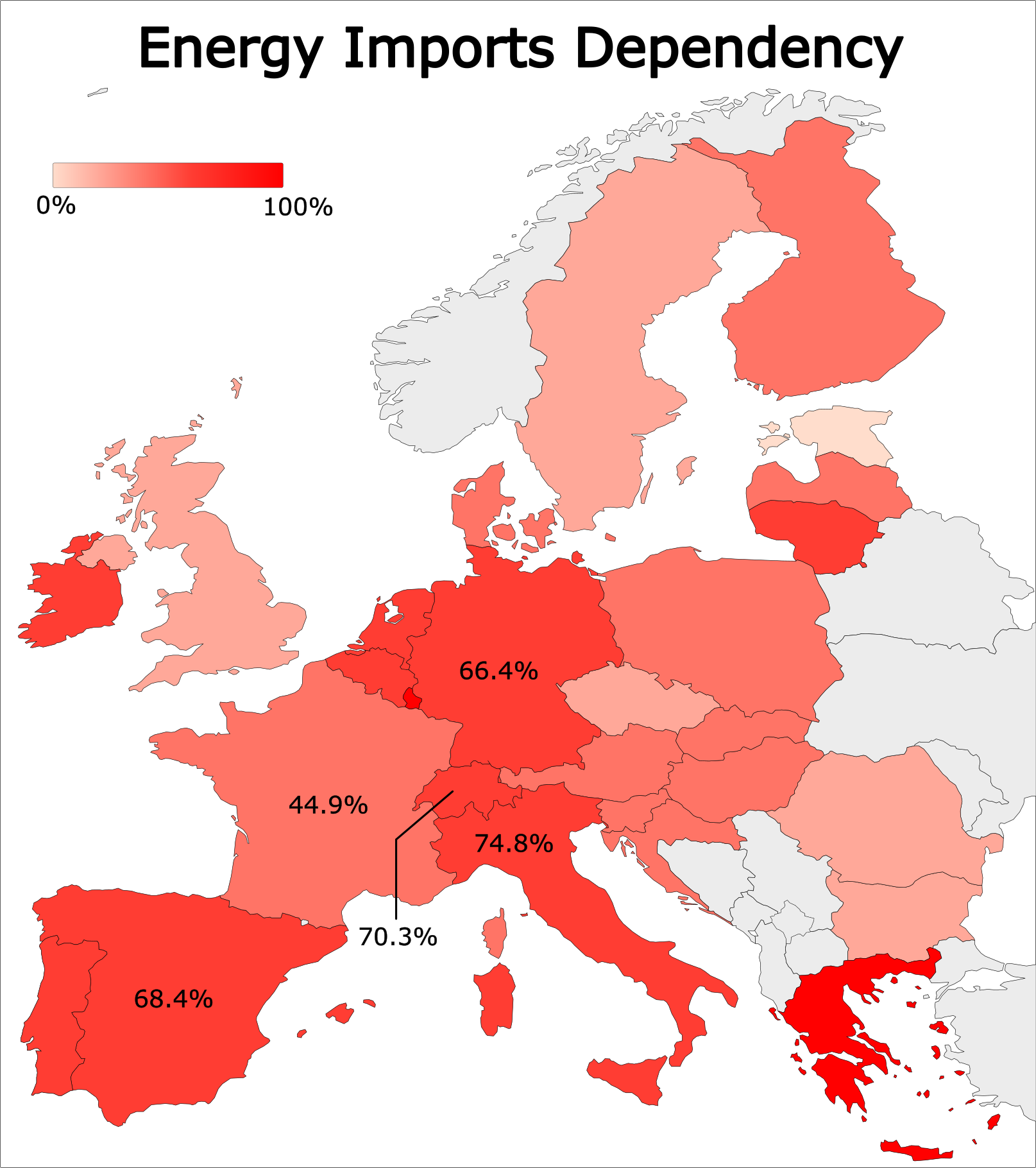
Europe remains heavily dependent on imported energy.
In recent years, all EU member states and Switzerland have continued to rely on external sources to meet a significant share of their energy needs.
This dependence exposes Europe to supply disruptions, price volatility, and geopolitical uncertainty, highlighting the urgent need for resilient, locally produced energy solutions.
Sources: Eurostat, 2023 and Swiss Confederation, 2023
SAF Regulations
Europe’s aviation sector is entering a transition away from fossil jet fuel
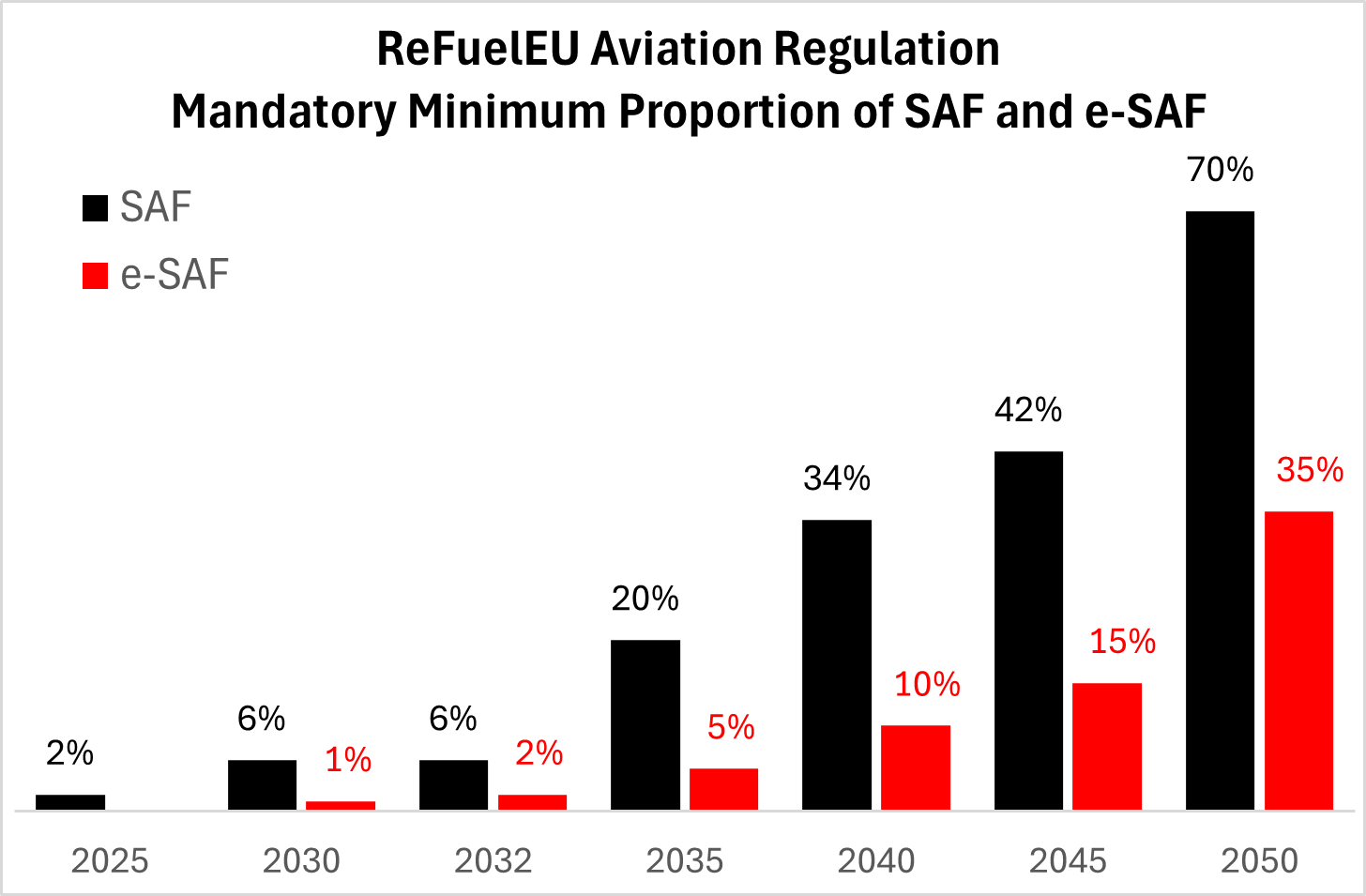
Under the ReFuelEU Aviation regulation, in force since 2025, mandatory sustainable aviation fuels (SAF) blending rises to 70% by 2050, including a 35% sub-mandate for synthetic SAF (e-SAF).
However, SAF made up just 0.6% of European jet fuel in 2024, revealing a wide gap between targets and supply.
Meeting these mandates will require rapid deployment of scalable, domestic SAF production pathways.
E-Fuels for Aviation
Current SAF supply in Europe depends almost entirely on bio-based feedstocks such as used cooking oil, constrained by availability, land use, and global competition.
In contrast, e-SAF avoids biomass limits and can leverage renewable electricity to provide a consistent and predictable fuel supply.
As the European SAF market is set to grow tenfold by 2032, e-fuels offer a strategic solution. Commercial production has yet to emerge, highlighting the urgent need for scalable SAF solutions.
Sources: European Commission and ReFuelEU Aviation